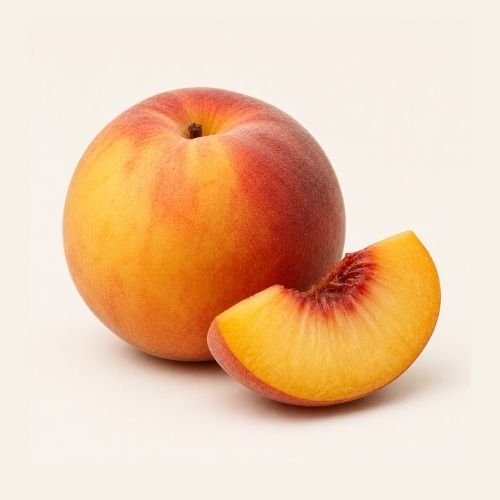
The peach holds a special place among summer’s most beloved fruits. Its delicate, thin and velvety skin, covered with fine hairs, ranges from golden yellow to orange-yellow, often enhanced by red blushes and streaks. With every bite, its tender flesh releases a burst of juice, natural sweetness, rich fruity flavor and a delicate aroma. As a stone fruit, the peach has a characteristic hard stone at its center, which encloses a single seed.
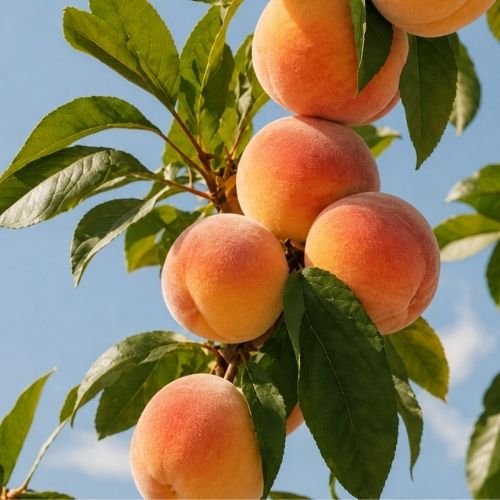
Peach cultivation requires fertile soil in regions with warm, sunny conditions and relatively mild winters. Orchards need careful pruning, efficiently managed irrigation systems, such as drip or micro-sprinkler irrigation, and regular monitoring throughout the growing season. Biotechnical methods, such as pheromone-based mating disruption, may also form part of integrated plant-protection practices. Applications for plant-protection products and fertilizers are carefully monitored and recorded, in accordance with applicable EU and national requirements.
Fresh peaches can be enjoyed as part of a healthy, varied and balanced diet, adding natural sweetness and variety to everyday eating. They can also bring a refreshing fruity contrast to simple appetizers and other dishes. Explore our suggested recipe for an easy way to combine fruit and leafy greens in everyday meals