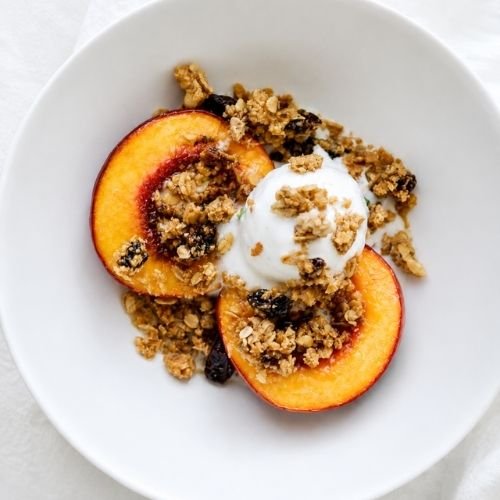
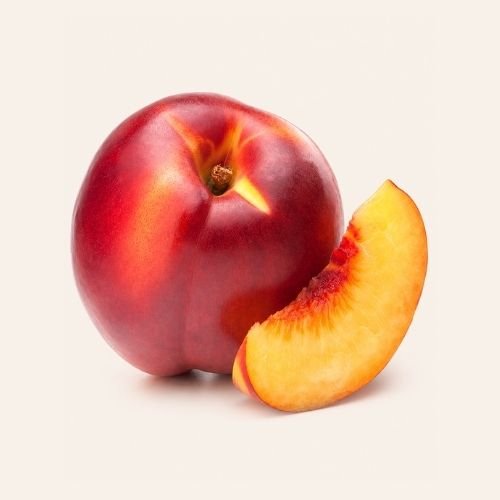
Nectarine is closely related to the peach and is distinguished by its smooth, glossy skin. Its thin skin ranges from yellow-orange to deep red, often combining both shades, and surrounds firm, juicy flesh. Its yellow flesh offers natural sweetness, a rich fruity flavor and a refreshing note of acidity. Like the peach, the nectarine belongs to the group of stone fruits. At the center of the fruit lies a hard stone enclosing a single seed, which contains the embryo and stored nutrients needed for the early development of a new plant.
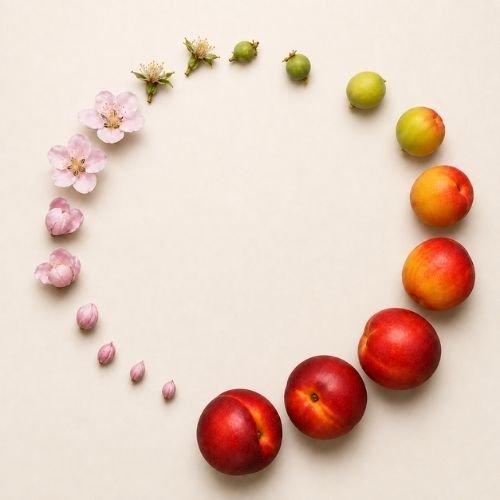
Nectarine cultivation benefits from a temperate climate and suitable, well-drained soil conditions. Pruning supports balanced tree growth and fruiting, while carefully managed irrigation, balanced fertilization, fruit thinning and regular monitoring throughout the growing season help the fruit develop the desired size, color, flavor and firmness.
Enjoying a variety of fresh fruits and vegetables throughout the day can help broaden the range of nutrients included in the diet, especially when they are naturally flavorful and easy to incorporate into simple, balanced dishes. Like other fresh fruits, nectarines provide water and a range of naturally occurring nutrients, while their sweet flavor and juicy texture make them easy to include in everyday eating. For more inspiration on how to include them in everyday meals and snacks, discover our recipes.